Music does more than just reflect society. It can help people remember, grieve, and survive, especially during war, displacement, or when their culture is threatened. In these times, music acts as a living archive, keeping histories, languages, and emotions alive. Ukrainian music is a clear example of this. Jamala’s “1944” and Kalush Orchestra’s “Stefania” both begin with personal family stories but become public statements about memory, identity, and survival. Through their singing, language, rhythm, instruments, and performances, these songs show how music can turn private distress into a mutual memory.
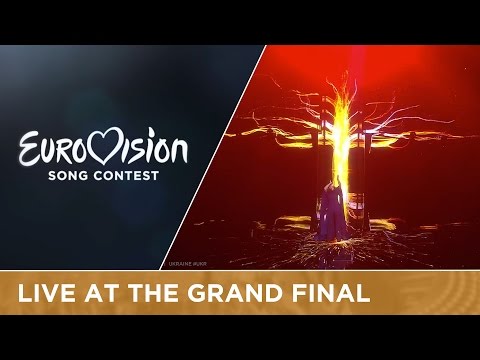
“1944” was written and performed by Jamala, a Ukrainian singer with Crimean Tatar roots. The song represented Ukraine at the 2016 Eurovision Song Contest in Stockholm, Sweden, and won first place. Its title refers to the 1944 deportation of Crimean Tatars under Joseph Stalin, when they were forced from their homeland. Jamala connects the song to her own family, especially her great-grandmother, who was deported from Crimea with her children. The timing was important, too. Since the song was performed just two years after Russia’s 2014 annexation of Crimea, listeners could see a link between past trauma and current political violence. Tara John writes in TIME that the song brought attention to the deportation of Crimean Tatars and the pain that has lasted for generations (John). So, “1944” is more than a family story. It speaks about a society formed by displacement, memory, and the fight to protect identity.
Jamala. “1944.” Eurovision Song Contest in Stockholm, Sweden.
The musical features of “1944” make its message even stronger. Jamala’s voice is one of the most important parts. Instead of sounding relaxed or polished like typical pop music, her singing is tense, emotional, and almost wounded, especially on the high notes. This makes the song feel like a personal testimony. She is not just describing trauma; she makes the listener feel it. Language is also key. The song uses both English and Crimean Tatar. English helps international listeners understand, but Crimean Tatar gives the song a deeper cultural meaning. Even if listeners do not know the words, hearing the language shows that the culture is still alive. Another important part is the song’s dynamics. It starts quietly and darkly, then slowly grows louder and more intense. This makes the grief feel like it is rising up instead of staying hidden. I think “1944” is powerful because it is unsettling. It is beautiful, but not in a pleasant way. It asks listeners to face pain rather than turn away from it.
Kalush Orchestra’s “Stefania” offers a different kind of social message. The song came out in 2022 and represented Ukraine at the Eurovision Song Contest in Turin, Italy, where it won with 631 points (European Broadcasting Union). At first, “Stefania” was a tribute to frontman Oleh Psiuk’s mother. But after Russia’s full-scale invasion of Ukraine in February 2022, the song’s meaning grew. The mother in the song started to stand for Ukraine itself: caring, tired, loved, and still strong. Jordan Hoffman from Vanity Fair calls Kalush Orchestra a Ukrainian folk-rap group and notes that “Stefania” uses Ukrainian folk instruments such as the sopilka and telenka (Hoffman). Because of this, “Stefania” turned out to be more than a personal song. It turned into a song about home, protection, and national strength.
The music in “Stefania” conveys its message through its instrumentation, rhythm, and contrasts. The folk instruments give the song a strong Ukrainian identity. The woodwind sounds connect the music to a specific culture and place. It does not sound like regular pop music; it has a unique Ukrainian style. The rap rhythm adds something extra. The verses are fast and direct, making the song feel urgent. This fits the wartime setting because the song does not feel passive or defeated. It keeps moving forward. The difference between the rap verses and the melodic chorus is also important. The rap is modern, sharp, and energetic, while the chorus is softer and gentler, almost like a serenade. This contrast connects the image of the mother to the idea of the homeland. The song shows both strength and gentleness. I think “Stefania” is powerful because it does not sound hopeless. It carries grief, but also warmth, movement, and pride.
Kalush Orchestra. “Stefania.” Performed at the Eurovision Song Contest in Turin, Italy.
Together, “1944” and “Stefania” show two ways music can respond to society. “1944” looks to the past, making listeners remember a painful history that still matters today. “Stefania” speaks from the middle of a current crisis, showing that culture can survive even during war. One song feels haunted, while the other feels alive and full of movement. Both songs use family to connect personal stories to history. Jamala’s great-grandmother and Psiuk’s mother are more than private people; they make national suffering feel personal and real. Through them, the songs show that history is not purely an idea. It lives in families, languages, voices, and memories. This is why music can be a living archive. It keeps safe what violence tries to destroy: identity, belonging, and love for home.
My relationship with music has changed during this course. Now, I hear songs as more than just things I like or dislike. Before, I mostly noticed if a song made me feel something. Now, I pay attention to how that feeling is created through rhythm, sound, language, and structure. This course showed me that the music itself is connected to society, history, and identity. As someone from Ukraine, studying “1944” and “Stefania” feels close because these songs show how music can hold both pain and pride. I now see music as a kind of memory. It can show what people have survived, what they refuse to forget, and how they keep going.
“Jamala - 1944 (LIVE) | Ukraine | Grand Final | Eurovision 2016.” YouTube, uploaded by Eurovision Song Contest, 2016, https://www.youtube.com/watch?v=B-rnM-MwRHY. Accessed 26 Apr. 2026.
“Kalush Orchestra - Stefania (LIVE) | Ukraine | Grand Final | Eurovision 2022.” YouTube, uploaded by Eurovision Song Contest, 2022, https://www.youtube.com/watch?v=F1fl60ypdLs. Accessed 26 Apr. 2026.




No comments:
Post a Comment