Music does more than just reflect society. It can help people remember, grieve, and survive, especially during war, displacement, or when their culture is threatened. In these times, music acts as a living archive, keeping histories, languages, and emotions alive. Ukrainian music is a clear example of this. Jamala’s “1944” and Kalush Orchestra’s “Stefania” both begin with personal family stories but become public statements about memory, identity, and survival. Through their singing, language, rhythm, instruments, and performances, these songs show how music can turn private distress into a mutual memory.
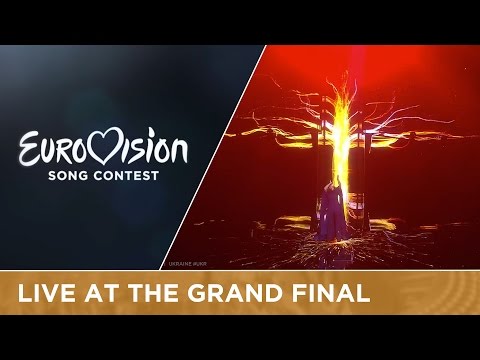
“1944” was written and performed by Jamala, a Ukrainian singer with Crimean Tatar roots. The song represented Ukraine at the 2016 Eurovision Song Contest in Stockholm, Sweden, and won first place. Its title refers to the 1944 deportation of Crimean Tatars under Joseph Stalin, when they were forced from their homeland. Jamala connects the song to her own family, especially her great-grandmother, who was deported from Crimea with her children. The timing was important, too. Since the song was performed just two years after Russia’s 2014 annexation of Crimea, listeners could see a link between past trauma and current political violence. Tara John writes in TIME that the song brought attention to the deportation of Crimean Tatars and the pain that has lasted for generations (John). So, “1944” is more than a family story. It speaks about a society formed by displacement, memory, and the fight to protect identity.
Jamala. “1944.” Eurovision Song Contest in Stockholm, Sweden.
The musical features of “1944” make its message even stronger. Jamala’s voice is one of the most important parts. Instead of sounding relaxed or polished like typical pop music, her singing is tense, emotional, and almost wounded, especially on the high notes. This makes the song feel like a personal testimony. She is not just describing trauma; she makes the listener feel it. Language is also key. The song uses both English and Crimean Tatar. English helps international listeners understand, but Crimean Tatar gives the song a deeper cultural meaning. Even if listeners do not know the words, hearing the language shows that the culture is still alive. Another important part is the song’s dynamics. It starts quietly and darkly, then slowly grows louder and more intense. This makes the grief feel like it is rising up instead of staying hidden. I think “1944” is powerful because it is unsettling. It is beautiful, but not in a pleasant way. It asks listeners to face pain rather than turn away from it.
Kalush Orchestra’s “Stefania” offers a different kind of social message. The song came out in 2022 and represented Ukraine at the Eurovision Song Contest in Turin, Italy, where it won with 631 points (European Broadcasting Union). At first, “Stefania” was a tribute to frontman Oleh Psiuk’s mother. But after Russia’s full-scale invasion of Ukraine in February 2022, the song’s meaning grew. The mother in the song started to stand for Ukraine itself: caring, tired, loved, and still strong. Jordan Hoffman from Vanity Fair calls Kalush Orchestra a Ukrainian folk-rap group and notes that “Stefania” uses Ukrainian folk instruments such as the sopilka and telenka (Hoffman). Because of this, “Stefania” turned out to be more than a personal song. It turned into a song about home, protection, and national strength.
The music in “Stefania” conveys its message through its instrumentation, rhythm, and contrasts. The folk instruments give the song a strong Ukrainian identity. The woodwind sounds connect the music to a specific culture and place. It does not sound like regular pop music; it has a unique Ukrainian style. The rap rhythm adds something extra. The verses are fast and direct, making the song feel urgent. This fits the wartime setting because the song does not feel passive or defeated. It keeps moving forward. The difference between the rap verses and the melodic chorus is also important. The rap is modern, sharp, and energetic, while the chorus is softer and gentler, almost like a serenade. This contrast connects the image of the mother to the idea of the homeland. The song shows both strength and gentleness. I think “Stefania” is powerful because it does not sound hopeless. It carries grief, but also warmth, movement, and pride.
Kalush Orchestra. “Stefania.” Performed at the Eurovision Song Contest in Turin, Italy.
Together, “1944” and “Stefania” show two ways music can respond to society. “1944” looks to the past, making listeners remember a painful history that still matters today. “Stefania” speaks from the middle of a current crisis, showing that culture can survive even during war. One song feels haunted, while the other feels alive and full of movement. Both songs use family to connect personal stories to history. Jamala’s great-grandmother and Psiuk’s mother are more than private people; they make national suffering feel personal and real. Through them, the songs show that history is not purely an idea. It lives in families, languages, voices, and memories. This is why music can be a living archive. It keeps safe what violence tries to destroy: identity, belonging, and love for home.
My relationship with music has changed during this course. Now, I hear songs as more than just things I like or dislike. Before, I mostly noticed if a song made me feel something. Now, I pay attention to how that feeling is created through rhythm, sound, language, and structure. This course showed me that the music itself is connected to society, history, and identity. As someone from Ukraine, studying “1944” and “Stefania” feels close because these songs show how music can hold both pain and pride. I now see music as a kind of memory. It can show what people have survived, what they refuse to forget, and how they keep going.
“Jamala - 1944 (LIVE) | Ukraine | Grand Final | Eurovision 2016.” YouTube, uploaded by Eurovision Song Contest, 2016, https://www.youtube.com/watch?v=B-rnM-MwRHY. Accessed 26 Apr. 2026.
“Kalush Orchestra - Stefania (LIVE) | Ukraine | Grand Final | Eurovision 2022.” YouTube, uploaded by Eurovision Song Contest, 2022, https://www.youtube.com/watch?v=F1fl60ypdLs. Accessed 26 Apr. 2026.
When people talk about Whiplash, they often focus on Fletcher’s cruelty or Andrew’s obsession. That makes sense because both drive the film’s intensity. But one of the most powerful parts of the movie is its use of “Caravan.” On its own, this jazz standard already sticks in your mind. In Whiplash, it becomes something much more urgent. It is no longer just a song; you listen to it, and it feels like a challenge you have to get through. By the time the final performance bursts onto the screen, “Caravan” is not just background music. It becomes the sound of pressure, pride, fear, and ambition all coming together in one unforgettable moment.
Whiplash, directed by Damien Chazelle in 2014, tells the story of Andrew Neiman, a young jazz drummer aiming for greatness. I chose “Caravan” from the film. Created by Juan Tizol and Duke Ellington in the 1930s, this song became a jazz classic. In Whiplash, John Wasson’s arrangement merges that legacy with intense energy. The mix of classic jazz and modern tension gives “Caravan” new, dramatic life.
What makes “Caravan” such a strong choice is the part it plays in the story. It isn’t just there to make the ending sound exciting; it’s the emotional high point of the whole film. By the end, Andrew and Fletcher are no longer just student and teacher. Now, they seem like two people fighting for control, approval, and identity. When Andrew takes over and launches into the long final solo, “Caravan” becomes proof of what he has turned into. It shows his skill. It also reveals how much pressure has shaped him. Chazelle has said Whiplash is about the pain of making music. That idea is clear in this scene. The performance is exciting, but it’s also tense, almost hard to watch.
The social message in “Caravan” makes it more than just a great movie scene. The piece points to a bigger idea: the belief that greatness comes from suffering. Fletcher acts as if cruelty is necessary, as if humiliation is just another way to teach. This idea is not limited to music school. It matches attitudes in sports, education, and work, where people sometimes praise harshness and call it discipline. RogerEbert.com says the film offers social commentary on what it takes to succeed in a tough, competitive world, and that seems right. Chazelle also links the film to obsession, perfection, and the harm that comes from demanding the impossible. So even though “Caravan” is exciting, it does not give a simple message about success. It leaves the audience with a harder question: if brilliance comes from emotional pain, is that kind of greatness really worth admiring?
What stands out to me in “Caravan” is its strong, fast rhythm. The piece feels restless and never lets you relax. The dynamics build pressure, getting louder and more intense as the drumming dominates. The urgent tempo adds to the tension. That’s why the music fits Whiplash, it’s determined yet anxious. The technical skill impresses me, but I don’t hear just triumph. It feels both exciting and uneasy, making it memorable long after the movie ends.
What I love most about “Caravan” in Whiplash is how it shows music can do more than sound good; it tells a story. The performance isn’t only about skill or show; it reveals Andrew’s drive, Fletcher’s need for control, and the dark side of chasing perfection. After seeing it in the film, I can’t hear “Caravan” as just another jazz song. It becomes a blend of conflict, emotion, and meaning, making it unforgettable.
When people talk about music, the composer gets most of the attention. That makes sense, since the composer creates the song’s foundation. But it’s the performers who bring those notes to life, filling the music with emotion and energy. Ella Fitzgerald proves this. She didn’t have to write every song she sang to make it her own. Her true talent was in interpreting songs. She could turn any piece into something playful, sharp, elegant, and unforgettable. That’s why she’s such a clear example of what a performer can do.
Ella Fitzgerald’s musical journey makes her especially interesting to learn about. According to Britannica, she first wanted to be a dancer, but after singing at an amateur contest at the Apollo Theatre in 1934, she won first prize. The next year, she joined Chick Webb’s orchestra, and after Webb died in 1939, she led the band before starting her solo career. Over the years, she became one of the world’s most respected jazz singers. Britannica praises her skill with rhythm, harmony, intonation, and diction. The Smithsonian also notes her versatility and her ability to invent new melodies while singing, placing her alongside top instrumental improvisers.
People often overlook how important performers are. Some believe interpreting music is merely repeating what’s written. Ella Fitzgerald, however, proves otherwise. More than just singing notes, a great performer shapes pacing, phrasing, tone, and emotion. Through these choices, a song might feel intimate, witty, dramatic, smooth, or energetic. For Ella, her voice functions almost like another jazz instrument. She doesn’t simply add decoration; she becomes part of the music. That’s why performers like her matter. Without them, music remains static. With them, it becomes alive, flexible, and human.
The first song, “Mack the Knife,” was composed by Kurt Weill with lyrics by Bertolt Brecht for The Threepenny Opera in 1928 in Germany. There, it was first called “Die Moritat von Mackie Messer.” The English version, which became popular in the United States, was adapted by Marc Blitzstein. Ella’s version comes from her 1960 Berlin concert recording, Mack the Knife: Ella in Berlin. This was a live performance at the start of her European tour with the Paul Smith Quartet.
“Mack the Knife” (Live in Berlin, 1960)
What grabs me most in “Mack the Knife” is the rhythm and phrasing. The rhythm swings, but never feels stiff or robotic; there’s a groove that’s impossible to ignore. Ella sounds completely at ease, yet every note lands with precision, and that effortless balance is one of the coolest things about her style. She nudges words just ahead of or behind the beat, making the song feel like a lively conversation instead of a rigid script. Her phrasing is playful and loose, as if she’s grinning through every line. Then there’s her tone: bright, controlled, and bursting with personality. On the other hand, this song might turn theatrical, but Ella keeps it witty, vibrant, and irresistibly charming. I can’t just sit back and listen to her voice, which draws me in, as if she’s inventing the song on the spot. That’s the magic of a true performer: transforming a well-known tune into a living, breathing event.
The second song, “How High the Moon,” pairs Morgan Lewis’s music with Nancy Hamilton’s lyrics. First heard in the 1940 Broadway revue Two for the Show, it began as a dreamy ballad. The Songwriters Hall of Fame notes it’s now often played up-tempo. Ella’s Berlin performance is a masterclass in reinventing a song’s spirit without changing a note.
“How High the Moon” (Live at Deutschlandhalle, Berlin, 1960)
In “How High the Moon,” the two things that stand out most to me are the tempo and the melody. The tempo is fast and energetic, shifting the mood from dreamy to exciting. Instead of drifting, the song moves forward, giving Ella room to show her agility. The melody is even more impressive. She stretches it, plays with it, and improvises for long sections, making her voice sound almost like an instrument. I also notice the harmony in the background, supporting everything she does. The chord changes give the song structure, but Ella never seems limited by them. She moves around them freely. I really admire this performance. It feels joyful, bold, and incredibly skilled, but never like she’s trying too hard. She just does it naturally. Here, the performer’s job isn’t just to sing well, but to show how much creativity and freedom can exist in a song written by someone else. What I love most about Ella Fitzgerald is that her talent feels close to the listener. Some singers are technically great but feel distant. Ella isn’t like that. Even when she’s doing something complex, she still sounds warm, open, and inviting. That’s one of the best reasons why performers matter. A composer gives us the structure, but a performer gives us the experience. Ella Fitzgerald is an interpreter, storyteller, improviser, and emotional guide all at once. After hearing these two songs, I don’t just think about how well they were written. I think about how performance itself can be an art. That, to me, is the role of the performer.
I don’t experience Ukrainian folk music as an outsider. It’s part of who I am. That makes writing about it personal. No matter where the songs come from or what their purpose is, I always recognize something familiar: strong singing, raw emotion, and communal repetition. The music is closely tied to rituals, memory, and daily life. Ukrainian folk music is often split into two types: ritual and non-ritual. It has traditionally been connected to holidays, weddings, seasons, storytelling, and dance rather than simple entertainment. (Crees)
For this blog, I chose two selections because they show different sides of Ukrainian folk tradition. One centers on ritual singing, while the other highlights instrumental dance music. The first is “Vesnianka: The Herdsman,” performed by the Folk Ensemble of Stari Koni in the Rivne region. It comes from Ukraine: Traditional Music, a collection of traditional recordings released by Smithsonian Folkways in 1991. The second selection is “Hutsulka (Ukrainian Folk Dance),” performed by the Ukrainian State Orchestra of Folk Instruments. This recording comes from Songs and Dances of the Ukraine, released in 1957. Together, these pieces allow me to discuss both the vocal and instrumental sides of Ukrainian folk music. (Smithsonian Folkways Recordings)
“Vesnianka: The Herdsman”
Turning to what defines Ukrainian folk music, I am struck by its distinctive sound. One striking feature is the singing style called white voice (білий голос), which relies on an open throat and chest voice. The result is bright, powerful, and clear rather than soft or polished. Ukrainian folk singing also often uses polyphony, so multiple vocal lines sound at once. In northern Ukraine, the music can feature sharp intervals and dissonant harmonies, which make it feel strong and piercing rather than smooth. Traditional instruments such as the bandura, sopilka, tsymbaly, trembita, violin, and dulcimer also shape the unique character of Ukrainian folk music. (Crees)
To elaborate, the first piece, “Vesnianka: The Herdsman,” is a vesnianka, or spring song. Vesnianky are ritual songs sung in spring. They often include dances and games. They express hopes for renewal, a good harvest, and happiness. This music was not made only for listening. It served a social and symbolic role. It welcomed the new season and connected people to nature, community, and traditions. (Smithsonian Folkways Recordings)
When I listen to “Vesnianka: The Herdsman,” the first thing I notice is the texture. The sound is layered but not polished. It feels raw, open, and alive. The bright, direct voices make the music feel honest, while the simple melody gains intensity through group singing. The steady, repeating rhythm suits ritual music and makes the piece feel communal. It sounds meant to be sung together outdoors as part of a shared tradition. To me, that is what makes Ukrainian folk music so special. It does not depend on complexity to create meaning. Instead, it creates feelings through sound, repetition, and energy. (Crees)
In contrast, the second piece, “Hutsulka,” highlights another side of Ukrainian folk music. Unlike the first selection, which is ritual and vocal, this one is instrumental and made for dancing. Smithsonian Folkways describes Songs and Dances of the Ukraine as a collection of “joyous and boisterous dance music,” and the Encyclopedia of Ukraine explains that folk instruments were mainly used for dances, marches, plays, and community events. Dance music such as hopak, kozachok, kolomyika, and hutsulka was often performed by a single instrument, such as a violin, or by a small ensemble. The classic ensemble, called troisti muzyky, used strings, a drum, and tsymbaly. (Smithsonian Folkways Recordings)
“Hutsulka”
In “Hutsulka,” rhythm stands out the most. The steady beat drives the piece and gives it a lively energy, making it ideal for dancing. Repeating patterns keep the momentum strong, while the instruments blend together, each adding its own color. There is a bounce to the music that makes it feel uplifting. Even without seeing the dance, I can imagine people moving, celebrating, and gathering together. Because of that, the piece feels deeply cultural and social rather than meant for quiet, solitary listening. (Smithsonian Folkways Recordings)
I appreciate how Ukrainian folk music blends strength with tenderness. Its sharp, earthy, celebratory, and haunting qualities give it emotional depth and a unique character. Encyclopedia Britannica notes that Ukrainian folk music includes ritual songs, ballads, and dumy (narrative epics). These are often sung a cappella or with folk instruments, especially the bandura, which is considered Ukraine’s national instrument. This range helps explain why the tradition feels so expansive. Ukrainian folk music can carry history, hardship, celebration, memory, and daily ritual all at once. (Encyclopedia Britannica)
My reaction to these pieces is different from how I respond to music from other cultures. Ukrainian folk music does not sound exotic to me. It feels familiar, even when I study it academically. “Vesnianka: The Herdsman” feels haunting and deeply rooted. It almost carries old memories. “Hutsulka” feels lively and physical. It makes me think of movement, celebration, and the way music can bring people together without words. What I value most is that both pieces feel honest. They are not overly polished. That makes them powerful because they come from real people and real traditions.
Overall, Ukrainian folk music stands out for its bright, open singing, frequent use of multiple voices, strong rhythms, repetition, and the distinctive sound of traditional instruments such as the bandura, sopilka, tsymbaly, and trembita. Equally important is its cultural role: these songs and dances mark the seasons, accompany rituals, tell stories, preserve memory, and connect communities. Studying this music is not just interesting to me; it feels essential and rewarding to me as a part of who I am.
Works Cited
Encyclopedia of Ukraine. “Folk Musical Instruments.” Canadian Institute of Ukrainian Studies. (Encyclopedia of Ukraine)
Encyclopedia of Ukraine. “Vesnianky-hahilky.” Canadian Institute of Ukrainian Studies. (Encyclopedia of Ukraine)
Some songs don’t need to force emotion. They come naturally, honest and open, and before you know it, you’re pausing whatever you’re doing. “Is This Love” is one of those rare songs. It’s a classic rock ballad that feels warm, dramatic, and oddly comforting, like watching someone find the courage to show they care.
“Is This Love” by Whitesnake was released as a single on May 18, 1987. It was written by David Coverdale and John Sykes, and produced by Mike Stone and Keith Olsen. (Wikipedia) It comes from the self-titled album Whitesnake, released in the U.S. on March 16, 1987, by Geffen Records (and in the UK about two weeks later by EMI). (Wikipedia) The song became a big hit, reaching No. 2 on the Billboard Hot 100 and No. 9 on the UK Singles Chart, and it also got a lot of attention during the band’s MTV-heavy era. (Wikipedia)
“Is This Love” by Whitesnake, May 18, 1987.
To me, this song feels like driving through a quiet city late at night, when everything is peaceful, and your mind can unwind. The romance isn’t exaggerated, but genuine, like someone nervously asking a question and hoping things stay the same. It’s about handling strong feelings gently, without letting them spill over.
Melody
The melody moves smoothly and at an easy pace, making it feel simple to sing along. When the chorus comes in, the vocals rise and hang in the air, building up the emotion until it almost feels too much.
Harmony
The chords sound warm and full, balancing richness with simplicity. The guitar adds gentle tones that create a romantic mood, and the minor chords add a bit of vulnerability.
Rhythm
The song is in 4/4 time, and the rhythm stays steady throughout. Guitar arpeggios keep the music moving, even when things slow down. That steady beat helps the song feel grounded and close.
Tempo
The tempo is slow to medium, like most classic ballads. This gives the lyrics and chords space, making the song feel thoughtful instead of hurried.
Dynamics
The song begins quietly and slowly builds up in the chorus. It feels like the singer is holding back emotions at first, then finally lets them out.
All five elements work together to create the feeling of a true confession. The melody feels like someone sharing their truth through music. Harmony adds warmth and romance without becoming sad. Rhythm grounds the song, and the tempo lets each moment linger so the emotion sinks in. The dynamics make the chorus feel like that breathless moment when you realize how much the question matters.
That’s why “Is This Love” feels like more than just a love song to me. It’s like someone is right on the edge of saying something that really matters.
Final thought
If you want a song that’s both dramatic and gentle, and truly human at its core, “Is This Love” is a perfect choice. It’s a classic because it turns big emotions into something beautifully simple.
Works Cited
Wikipedia contributors. "Is This Love (Whitesnake song)." Wikipedia, The Free Encyclopedia. Wikipedia, The Free Encyclopedia, 13 Jan. 2026. Web. 25 Feb. 2026.
Hi everyone! My name is Sofia, and this is my first blog post. I am excited to start.
Music has always been a big part of my life. I spent years in choir, and it taught me rhythm, harmony, and how to work with others. Now I am into electronic music. I like layering sounds, building beats, and turning ideas into something real. I have learned that to create something good, you have to know the basics first, and that is why I am taking this class.
This photo is from my childhood in Ukraine, taken after one of our concerts. I also grew up dancing, so I often listen to music as a dancer would. For me, rhythm is not only something you hear. It is something you feel in your body.
I grew up listening to Stevie Wonder, and I still love his songs.